Friday, September 29, 2017

Obama atokwa na machozi alipomfikisha mwanawe chuo kikuu cha Harvard

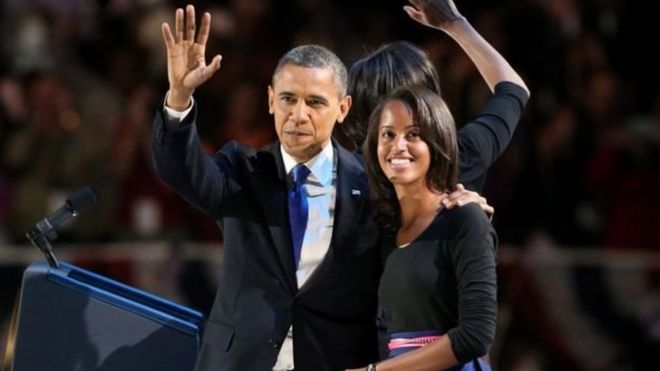
 Rais Obama na mwanawe Malia Obama
Rais wa zamani wa Marekani Barack Obama amesema kuwa hakuweza kuzuia machozi yake alipomfikisha mwanawe mkubwa Malia katika chuo kikuu.
Ilikuwa kama ''upasuaiji uliofanyika hadharani'', rais huyo wa zamani alizungumzia kuhusu wakati alipomfikisha Malia katika chuo kikuu cha Harvard.

''Nilifurahi kwamba sikububujikwa na machozi mbele yake'', alisema bwana Obama.
''Lakini nilipokuwa nikirudi, maafisa wa jinai hawakuwepo nikaangalia mbele nikijifanya kwamba hawanisikii nikinungunika na kufuta pua yangu.Ilikuwa vigumu''.

Bwana Obama alielezea wakati huo siku ya Jumatatu wakati wa hafla ya wakfu wa Beau Biden. Shirika hilo la kusaidia jamii lilianzisha kwa heshima ya mwana{marehemu} wa aliyekuwa makamu wa rais Joe Biden
''Mwisho wa maisha yetu chochote kile ambacho utakuwa umefanikiwa, ambayo tutayakumbuka ni maisha mazuri ya wana wetu na baadaye kile kitakacholetwa na wajukuu zetu'', alisema Obama.

Malia mwenye umri wa miaka 19 aliamua kujiunga na chuo kikuu cha Harvard baada ya kupumzika kwa mwaka mmoja baada ya kukamilisha elimu ya shule za upili.
Bwana Obama mara kwa mara amekuwa akizungumza kuhusu umuhimu wa kuwa baba kwa wanawe.
''Katika mambo yote ambayo nimefanya nafurahia kuwa baba yenu'',aliwaambia wanawe wakati wa hutuba yake ya miwisho akiwa rais.

HISTORY OF AFRICA

Walking tall: from 4 million years ago

Africa is the setting for the long dawn of human history. From about four million years ago ape-like creatures walk upright on two feet in this continent. Intermediate between apes and men, they have been named Australopithecus. Later, some two million years ago, the first creatures to be classed as part of the human species evolve in Africa. They develop a technology based on sharp tools of flint, introducing what has become known as the Stone Age.

About a million years ago humans explore northwards out of Africa, beginning the process by which mankind has colonized the planet.


During the later part of the old Stone Age (see Divisions of the Stone Age), humans in Afica produce some of the earliest and most significant examples of prehistoric art. Paintings on stone slabs, found in Namibia, date from nearly 30,000 years ago. Rock and cave paintings survive from widely separated areas. They range from those of the San people, in southern Africa, to others dating from about 8000 BC in what is now the Sahara.

The Sahara is also the site of the earliest new Stone Age (or neolithic) culture to have been discovered in Africa.


A damp Sahara: 8000 - 3000 BC

The Sahara at this time supports not only elephant, giraffe and rhinoceros but hippopotamus and even fishes. It is a friendly landscape in which neolithic communities progress from hunting and gathering into a partly settled way of life, with the herding of cattle. Their paintings show that dogs have been domesticated and are sometimes used in the hunt - and that hunting methods include the pursuit of hippopotamus from boats made of reeds.

The paintings also suggest that these people wear woven materials as well as animal skins. The remains from their settlements reveal that they are skilful potters.


Around 3000 BC a climatic change gradually turns the Sahara to a desert (over the millennia it seems to have gone through a succession of humid and dry periods). The change brings to an end the first settled culture of Africa. The Sahara becomes the almost impenetrable barrier which throughout recorded history has separated the Mediterranean coast and north Africa from the rest of the continent.

At much the same time north Africa becomes the site of one of the world's first great civilizations, Egypt. There may perhaps be a link, in the migration eastwards of the Sahara people, but archaeology has found no evidence of it.


Africa's first civilizations: from 3000 BC

Egypt's natural links are in a northeasterly direction, following the Fertile Crescent up into western Asia. Similarly Ethiopia, the other early civilization of northeast Africa, is most influenced by Arabia, just across the Red Sea. So these two regions, Egypt and Ethiopia, flanked by desert to the west and equatorial jungle to the south, evolve at first in isolation from the rest of Africa.

But the development of maritime trade along the Mediterranean coast, pioneered by the Phoenicians in the 8th century BC, does increasingly bring Egypt into a specifically north African context.


The people of sub-Saharan Africa: 2000 - 500 BC

Much of the southern part of the African continent is occupied by tribes known as Khoisan, characterized by a language with a unique click in its repertoire of sounds. The main divisions of the Khoisan are the San (often referred to until recent times as Bushmen) and the Khoikhoi (similarly known until recently as Hottentots).

The tropical forests of central Africa are occupied largely by the Pygmies (with an average height of about 4'9', or less than 1.5m). But the Africans who will eventually dominate most of sub-Saharan Africa are tribes from the north speaking Bantu languages.


The Bantu languages probably derive from the region of modern Nigeria and Cameroon. This western area, bordering the Gulf of Guinea, is also the cradle of other early developments in African history.

Iron smelting is known here, as in other sites in a strip below the Sahara, by the middle of the 1st millennium BC. And the fascinating but still mysterious Nok culture, lasting from the 5th century BC to the 2nd century AD, provides magnificent pottery figures which stand at the beginning of a recognizably African sculptural tradition.


Probably during the first millennium BC, tribes speaking Bantu languages begin to move south. They gradually push ahead of them the Khoisan, in a process which will eventually make the Bantu masters of nearly all the southern part of the continent.

Meanwhile, in the regions immediately south of the desert, the first great kingdoms of sub-Saharan Africa become established during the first millennium AD

One of Africa's best kept secrets - its history

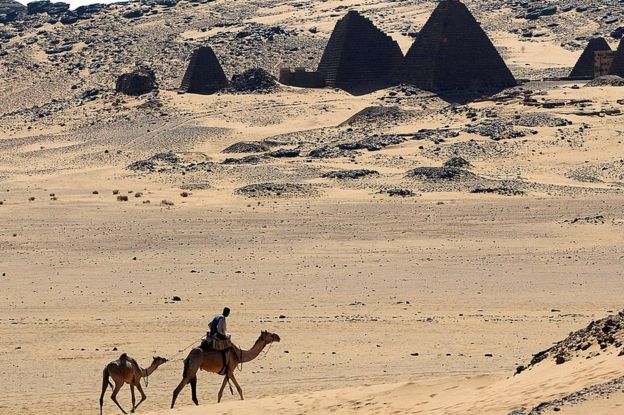
 A general view shows 27 January 2006 the Meroe archaeological site, 300 kms north of the Sudanese capital Khartoum
Africa has a rich and complex history but there is widespread ignorance of this heritage. A celebrated British historian once said there was only the history of Europeans in Africa. Zeinab Badawi has been asking what is behind this lack of knowledge and looking at the historical record for an African history series on BBC World News.

The Great Pyramid of Giza in Cairo is rightly considered one of the seven wonders of the ancient world. But travel further south along the River Nile and you will find a thousand pyramids that belonged to the Kingdom of Kush, in what is now Sudan.

Kush was an African superpower and its influence extended to what is now called the Middle East.
The kingdom lasted for many hundreds of years and in the eighth Century BC, it conquered Egypt and governed for the best part of a century.

What remains of the kingdom is equally impressive. More than 300 of these pyramids are still intact, almost untouched since they were built nearly 3,000 years ago

Some years ago I visited these pyramids. On my return to the UK, I asked my parents what they knew of their country's historic sites. Not much, it turned out.
This was odd since both of them could tell you a lot about Henry VIII and key points in British history.
I wondered given that my parents did not know enough about their own country's history whether this was likely to be true of many other Africans.

And as I talked to people I discovered that this was indeed the case.
A few years later, at Unesco's Paris headquarters, I saw on the bookshelves of Ethiopian-born Deputy Director-General Getachew Engida a collection of volumes - the General History of Africa.
This, it turned out, is one of Unesco's and the continent's best kept secrets: Africa's history written by African scholars

100 things that you did not know about Africa

1. The human race is of African origin. The oldest known skeletal remains of anatomically modern humans (or homo sapiens sapiens) were excavated at sites in East Africa. Human remains were discovered at Omo in Ethiopia that were dated at 195,000 years old, the oldest known in the world.

2. Skeletons of pre-humans have been found in Africa that date back between 4 and 5 million years. The oldest known ancestral type of humanity is thought to have been the australopithecus ramidus, who lived at least 4.4 million years ago.

3. Africans were the first to organise fishing expeditions 90,000 years ago. At Katanda, a region in northeastern Zaïre (now Congo), was recovered a finely wrought series of harpoon points, all elaborately polished and barbed. Also uncovered was a tool, equally well crafted, believed to be a dagger. The discoveries suggested the existence of an early aquatic or fishing based culture.

4. Africans were the first to engage in mining 43,000 years ago. In 1964 a hematite mine was found in Swaziland at Bomvu Ridge in the Ngwenya mountain range. Ultimately 300,000 artefacts were recovered including thousands of stone-made mining tools. Adrian Boshier, one of the archaeologists on the site, dated the mine to a staggering 43,200 years old.

5. Africans pioneered basic arithmetic 25,000 years ago. The Ishango bone is a tool handle with notches carved into it found in the Ishango region of Zaïre (now called Congo) near Lake Edward. The bone tool was originally thought to have been over 8,000 years old, but a more sensitive recent dating has given dates of 25,000 years old. On the tool are 3 rows of notches. Row 1 shows three notches carved next to six, four carved next to eight, ten carved next to two fives and finally a seven. The 3 and 6, 4 and 8, and 10 and 5, represent the process of doubling. Row 2 shows eleven notches carved next to twenty-one notches, and nineteen notches carved next to nine notches. This represents 10 + 1, 20 + 1, 20 - 1 and 10 - 1. Finally, Row 3 shows eleven notches, thirteen notches, seventeen notches and nineteen notches. 11, 13, 17 and 19 are the prime numbers between 10 and 20.

6. Africans cultivated crops 12,000 years ago, the first known advances in agriculture. Professor Fred Wendorf discovered that people in Egypt’s Western Desert cultivated crops of barley, capers, chick-peas, dates, legumes, lentils and wheat. Their ancient tools were also recovered. There were grindstones, milling stones, cutting blades, hide scrapers, engraving burins, and mortars and pestles.

7. Africans mummified their dead 9,000 years ago. A mummified infant was found under the Uan Muhuggiag rock shelter in south western Libya. The infant was buried in the foetal position and was mummified using a very sophisticated technique that must have taken hundreds of years to evolve. The technique predates the earliest mummies known in Ancient Egypt by at least 1,000 years. Carbon dating is controversial but the mummy may date from 7438 (±220) BC.

8. Africans carved the world’s first colossal sculpture 7,000 or more years ago. The Great Sphinx of Giza was fashioned with the head of a man combined with the body of a lion. A key and important question raised by this monument was: How old is it? In October 1991 Professor Robert Schoch, a geologist from Boston University, demonstrated that the Sphinx was sculpted between 5000 BC and 7000 BC, dates that he considered conservative.

9. On the 1 March 1979, the New York Times carried an article on its front page also page sixteen that was entitled Nubian Monarchy called Oldest. In this article we were assured that: “Evidence of the oldest recognizable monarchy in human history, preceding the rise of the earliest Egyptian kings by several generations, has been discovered in artifacts from ancient Nubia” (i.e. the territory of the northern Sudan and the southern portion of modern Egypt.)

10. The ancient Egyptians had the same type of tropically adapted skeletal proportions as modern Black Africans. A 2003 paper appeared in American Journal of Physical Anthropology by Dr Sonia Zakrzewski entitled Variation in Ancient Egyptian Stature and Body Proportions where she states that: “The raw values in Table 6 suggest that Egyptians had the ‘super-Negroid’ body plan described by Robins (1983). The values for the brachial and crural indices show that the distal segments of each limb are longer relative to the proximal segments than in many ‘African’ populations.”

11. The ancient Egyptians had Afro combs. One writer tells us that the Egyptians “manufactured a very striking range of combs in ivory: the shape of these is distinctly African and is like the combs used even today by Africans and those of African descent.”

12. The Funerary Complex in the ancient Egyptian city of Saqqara is the oldest building that tourists regularly visit today. An outer wall, now mostly in ruins, surrounded the whole structure. Through the entrance are a series of columns, the first stone-built columns known to historians. The North House also has ornamental columns built into the walls that have papyrus-like capitals. Also inside the complex is the Ceremonial Court, made of limestone blocks that have been quarried and then shaped. In the centre of the complex is the Step Pyramid, the first of 90 Egyptian pyramids.

13. The first Great Pyramid of Giza, the most extraordinary building in history, was a staggering 481 feet tall - the equivalent of a 40-storey building. It was made of 2.3 million blocks of limestone and granite, some weighing 100 tons.

14. The ancient Egyptian city of Kahun was the world’s first planned city. Rectangular and walled, the city was divided into two parts. One part housed the wealthier inhabitants – the scribes, officials and foremen. The other part housed the ordinary people. The streets of the western section in particular, were straight, laid out on a grid, and crossed each other at right angles. A stone gutter, over half a metre wide, ran down the centre of every street.

15. Egyptian mansions were discovered in Kahun - each boasting 70 rooms, divided into four sections or quarters. There was a master’s quarter, quarters for women and servants, quarters for offices and finally, quarters for granaries, each facing a central courtyard. The master’s quarters had an open court with a stone water tank for bathing. Surrounding this was a colonnade.

16 The Labyrinth in the Egyptian city of Hawara with its massive layout, multiple courtyards, chambers and halls, was the very largest building in antiquity. Boasting three thousand rooms, 1,500 of them were above ground and the other 1,500 were underground.

17. Toilets and sewerage systems existed in ancient Egypt. One of the pharaohs built a city now known as Amarna. An American urban planner noted that: “Great importance was attached to cleanliness in Amarna as in other Egyptian cities. Toilets and sewers were in use to dispose waste. Soap was made for washing the body. Perfumes and essences were popular against body odour. A solution of natron was used to keep insects from houses . . . Amarna may have been the first planned ‘garden city’.”

18. Sudan has more pyramids than any other country on earth - even more than Egypt. There are at least 223 pyramids in the Sudanese cities of Al Kurru, Nuri, Gebel Barkal and Meroë. They are generally 20 to 30 metres high and steep sided.

19. The Sudanese city of Meroë is rich in surviving monuments. Becoming the capital of the Kushite Empire between 590 BC until AD 350, there are 84 pyramids in this city alone, many built with their own miniature temple. In addition, there are ruins of a bath house sharing affinities with those of the Romans. Its central feature is a large pool approached by a flight of steps with waterspouts decorated with lion heads.

20. Bling culture has a long and interesting history. Gold was used to decorate ancient Sudanese temples. One writer reported that: “Recent excavations at Meroe and Mussawwarat es-Sufra revealed temples with walls and statues covered with gold leaf”.

21. In around 300 BC, the Sudanese invented a writing script that had twenty-three letters of which four were vowels and there was also a word divider. Hundreds of ancient texts have survived that were in this script. Some are on display in the British Museum.

22. In central Nigeria, West Africa’s oldest civilisation flourished between 1000 BC and 300 BC. Discovered in 1928, the ancient culture was called the Nok Civilisation, named after the village in which the early artefacts were discovered. Two modern scholars, declare that “[a]fter calibration, the period of Nok art spans from 1000 BC until 300 BC”. The site itself is much older going back as early as 4580 or 4290 BC.

23. West Africans built in stone by 1100 BC. In the Tichitt-Walata region of Mauritania, archaeologists have found “large stone masonry villages” that date back to 1100 BC. The villages consisted of roughly circular compounds connected by “well-defined streets”.

24. By 250 BC, the foundations of West Africa’s oldest cities were established such as Old Djenné in Mali.

25. Kumbi Saleh, the capital of Ancient Ghana, flourished from 300 to 1240 AD. Located in modern day Mauritania, archaeological excavations have revealed houses, almost habitable today, for want of renovation and several storeys high. They had underground rooms, staircases and connecting halls. Some had nine rooms. One part of the city alone is estimated to have housed 30,000 people.

26. West Africa had walled towns and cities in the pre-colonial period. Winwood Reade, an English historian visited West Africa in the nineteenth century and commented that: “There are . . . thousands of large walled cities resembling those of Europe in the Middle Ages, or of ancient Greece.”

27. Lord Lugard, an English official, estimated in 1904 that there were 170 walled towns still in existence in the whole of just the Kano province of northern Nigeria.

28. Cheques are not quite as new an invention as we were led to believe. In the tenth century, an Arab geographer, Ibn Haukal, visited a fringe region of Ancient Ghana. Writing in 951 AD, he told of a cheque for 42,000 golden dinars written to a merchant in the city of Audoghast by his partner in Sidjilmessa.

29. Ibn Haukal, writing in 951 AD, informs us that the King of Ghana was “the richest king on the face of the earth” whose pre-eminence was due to the quantity of gold nuggets that had been amassed by the himself and by his predecessors.

30. The Nigerian city of Ile-Ife was paved in 1000 AD on the orders of a female ruler with decorations that originated in Ancient America. Naturally, no-one wants to explain how this took place approximately 500 years before the time of Christopher Columbus!

31. West Africa had bling culture in 1067 AD. One source mentions that when the Emperor of Ghana gives audience to his people: “he sits in a pavilion around which stand his horses caparisoned in cloth of gold: behind him stand ten pages holding shields and gold-mounted swords: and on his right hand are the sons of the princes of his empire, splendidly clad and with gold plaited into their hair . . . The gate of the chamber is guarded by dogs of an excellent breed . . . they wear collars of gold and silver.”

32. Glass windows existed at that time. The residence of the Ghanaian Emperor in 1116 AD was: “A well-built castle, thoroughly fortified, decorated inside with sculptures and pictures, and having glass windows.”

33. The Grand Mosque in the Malian city of Djenné, described as “the largest adobe [clay] building in the world”, was first raised in 1204 AD. It was built on a square plan where each side is 56 metres in length. It has three large towers on one side, each with projecting wooden buttresses.

34. One of the great achievements of the Yoruba was their urban culture. “By the year A.D. 1300,” says a modern scholar, “the Yoruba people built numerous walled cities surrounded by farms”. The cities were Owu, Oyo, Ijebu, Ijesa, Ketu, Popo, Egba, Sabe, Dassa, Egbado, Igbomina, the sixteen Ekiti principalities, Owo and Ondo.

35. Yoruba metal art of the mediaeval period was of world class. One scholar wrote that Yoruba art “would stand comparison with anything which Ancient Egypt, Classical Greece and Rome, or Renaissance Europe had to offer.”

36. In the Malian city of Gao stands the Mausoleum of Askia the Great, a weird sixteenth century edifice that resembles a step pyramid.

37. Thousands of mediaeval tumuli have been found across West Africa. Nearly 7,000 were discovered in north-west Senegal alone spread over nearly 1,500 sites. They were probably built between 1000 and 1300 AD.

38. Excavations at the Malian city of Gao carried out by Cambridge University revealed glass windows. One of the finds was entitled: “Fragments of alabaster window surrounds and a piece of pink window glass, Gao 10th – 14th century.”

39. In 1999 the BBC produced a television series entitled Millennium. The programme devoted to the fourteenth century opens with the following disclosure: “In the fourteenth century, the century of the scythe, natural disasters threatened civilisations with extinction. The Black Death kills more people in Europe, Asia and North Africa than any catastrophe has before. Civilisations which avoid the plague thrive. In West Africa the Empire of Mali becomes the richest in the world.”

40. Malian sailors got to America in 1311 AD, 181 years before Columbus. An Egyptian scholar, Ibn Fadl Al-Umari, published on this sometime around 1342. In the tenth chapter of his book, there is an account of two large maritime voyages ordered by the predecessor of Mansa Musa, a king who inherited the Malian throne in 1312. This mariner king is not named by Al-Umari, but modern writers identify him as Mansa Abubakari II.

41. On a pilgrimage to Mecca in 1324 AD, a Malian ruler, Mansa Musa, brought so much money with him that his visit resulted in the collapse of gold prices in Egypt and Arabia. It took twelve years for the economies of the region to normalise.

42. West African gold mining took place on a vast scale. One modern writer said that: “It is estimated that the total amount of gold mined in West Africa up to 1500 was 3,500 tons, worth more than $30 billion in today’s market.”

43. The old Malian capital of Niani had a 14th century building called the Hall of Audience. It was an surmounted by a dome, adorned with arabesques of striking colours. The windows of an upper floor were plated with wood and framed in silver; those of a lower floor were plated with wood, framed in gold.

44. Mali in the 14th century was highly urbanised. Sergio Domian, an Italian art and architecture scholar, wrote the following about this period: “Thus was laid the foundation of an urban civilisation. At the height of its power, Mali had at least 400 cities, and the interior of the Niger Delta was very densely populated”.

45. The Malian city of Timbuktu had a 14th century population of 115,000 - 5 times larger than mediaeval London. Mansa Musa, built the Djinguerebere Mosque in the fourteenth century. There was the University Mosque in which 25,000 students studied and the Oratory of Sidi Yayia. There were over 150 Koran schools in which 20,000 children were instructed. London, by contrast, had a total 14th century population of 20,000 people.

46. National Geographic recently described Timbuktu as the Paris of the mediaeval world, on account of its intellectual culture. According to Professor Henry Louis Gates, 25,000 university students studied there.

47. Many old West African families have private library collections that go back hundreds of years. The Mauritanian cities of Chinguetti and Oudane have a total of 3,450 hand written mediaeval books. There may be another 6,000 books still surviving in the other city of Walata. Some date back to the 8th century AD. There are 11,000 books in private collections in Niger. Finally, in Timbuktu, Mali, there are about 700,000 surviving books.

48. A collection of one thousand six hundred books was considered a small library for a West African scholar of the 16th century. Professor Ahmed Baba of Timbuktu is recorded as saying that he had the smallest library of any of his friends - he had only 1600 volumes.

49. Concerning these old manuscripts, Michael Palin, in his TV series Sahara, said the imam of Timbuktu “has a collection of scientific texts that clearly show the planets circling the sun. They date back hundreds of years . . . Its convincing evidence that the scholars of Timbuktu knew a lot more than their counterparts in Europe. In the fifteenth century in Timbuktu the mathematicians knew about the rotation of the planets, knew about the details of the eclipse, they knew things which we had to wait for 150 almost 200 years to know in Europe when Galileo and Copernicus came up with these same calculations and were given a very hard time for it.”

50. The Songhai Empire of 16th century West Africa had a government position called Minister for Etiquette and Protocol.

51. The mediaeval Nigerian city of Benin was built to “a scale comparable with the Great Wall of China”. There was a vast system of defensive walling totalling 10,000 miles in all. Even before the full extent of the city walling had become apparent the Guinness Book of Records carried an entry in the 1974 edition that described the city as: “The largest earthworks in the world carried out prior to the mechanical era.”

52. Benin art of the Middle Ages was of the highest quality. An official of the Berlin Museum für Völkerkunde once stated that: “These works from Benin are equal to the very finest examples of European casting technique. Benvenuto Cellini could not have cast them better, nor could anyone else before or after him . . . Technically, these bronzes represent the very highest possible achievement.”

53. Winwood Reade described his visit to the Ashanti Royal Palace of Kumasi in 1874: “We went to the king’s palace, which consists of many courtyards, each surrounded with alcoves and verandahs, and having two gates or doors, so that each yard was a thoroughfare . . . But the part of the palace fronting the street was a stone house, Moorish in its style . . . with a flat roof and a parapet, and suites of apartments on the first floor. It was built by Fanti masons many years ago. The rooms upstairs remind me of Wardour Street. Each was a perfect Old Curiosity Shop. Books in many languages, Bohemian glass, clocks, silver plate, old furniture, Persian rugs, Kidderminster carpets, pictures and engravings, numberless chests and coffers. A sword bearing the inscription From Queen Victoria to the King of Ashantee. A copy of the Times, 17 October 1843. With these were many specimens of Moorish and Ashanti handicraft.”

54. In the mid-nineteenth century, William Clarke, an English visitor to Nigeria, remarked that: “As good an article of cloth can be woven by the Yoruba weavers as by any people . . . in durability, their cloths far excel the prints and home-spuns of Manchester.”

55. The recently discovered 9th century Nigerian city of Eredo was found to be surrounded by a wall that was 100 miles long and seventy feet high in places. The internal area was a staggering 400 square miles.

56. On the subject of cloth, Kongolese textiles were also distinguished. Various European writers of the sixteenth and seventeenth centuries wrote of the delicate crafts of the peoples living in eastern Kongo and adjacent regions who manufactured damasks, sarcenets, satins, taffeta, cloth of tissue and velvet. Professor DeGraft-Johnson made the curious observation that: “Their brocades, both high and low, were far more valuable than the Italian.”

57. On Kongolese metallurgy of the Middle Ages, one modern scholar wrote that: “There is no doubting . . . the existence of an expert metallurgical art in the ancient Kongo . . . The Bakongo were aware of the toxicity of lead vapours. They devised preventative and curative methods, both pharmacological (massive doses of pawpaw and palm oil) and mechanical (exerting of pressure to free the digestive tract), for combating lead poisoning.”

58. In Nigeria, the royal palace in the city of Kano dates back to the fifteenth century. Begun by Muhammad Rumfa (ruled 1463-99) it has gradually evolved over generations into a very imposing complex. A colonial report of the city from 1902, described it as “a network of buildings covering an area of 33 acres and surrounded by a wall 20 to 30 feet high outside and 15 feet inside . . . in itself no mean citadel”.

59. A sixteenth century traveller visited the central African civilisation of Kanem-Borno and commented that the emperor’s cavalry had golden “stirrups, spurs, bits and buckles.” Even the ruler’s dogs had “chains of the finest gold”.

60. One of the government positions in mediaeval Kanem-Borno was Astronomer Royal.

61. Ngazargamu, the capital city of Kanem-Borno, became one of the largest cities in the seventeenth century world. By 1658 AD, the metropolis, according to an architectural scholar housed “about quarter of a million people”. It had 660 streets. Many were wide and unbending, reflective of town planning.

62. The Nigerian city of Surame flourished in the sixteenth century. Even in ruin it was an impressive sight, built on a horizontal vertical grid. A modern scholar describes it thus: “The walls of Surame are about 10 miles in circumference and include many large bastions or walled suburbs running out at right angles to the main wall. The large compound at Kanta is still visible in the centre, with ruins of many buildings, one of which is said to have been two-storied. The striking feature of the walls and whole ruins is the extensive use of stone and tsokuwa (laterite gravel) or very hard red building mud, evidently brought from a distance. There is a big mound of this near the north gate about 8 feet in height. The walls show regular courses of masonry to a height of 20 feet and more in several places. The best preserved portion is that known as sirati (the bridge) a little north of the eastern gate . . . The main city walls here appear to have provided a very strongly guarded entrance about 30 feet wide.”

63. The Nigerian city of Kano in 1851 produced an estimated 10 million pairs of sandals and 5 million hides each year for export.

64. In 1246 AD Dunama II of Kanem-Borno exchanged embassies with Al-Mustansir, the king of Tunis. He sent the North African court a costly present, which apparently included a giraffe. An old chronicle noted that the rare animal “created a sensation in Tunis”.

65. By the third century BC the city of Carthage on the coast of Tunisia was opulent and impressive. It had a population of 700,000 and may even have approached a million. Lining both sides of three streets were rows of tall houses six storeys high.

66. The Ethiopian city of Axum has a series of 7 giant obelisks that date from perhaps 300 BC to 300 AD. They have details carved into them that represent windows and doorways of several storeys. The largest obelisk, now fallen, is in fact “the largest monolith ever made anywhere in the world”. It is 108 feet long, weighs a staggering 500 tons, and represents a thirteen-storey building.

67. Ethiopia minted its own coins over 1,500 years ago. One scholar wrote that: “Almost no other contemporary state anywhere in the world could issue in gold, a statement of sovereignty achieved only by Rome, Persia, and the Kushan kingdom in northern India at the time.”

68. The Ethiopian script of the 4th century AD influenced the writing script of Armenia. A Russian historian noted that: “Soon after its creation, the Ethiopic vocalised script began to influence the scripts of Armenia and Georgia. D. A. Olderogge suggested that Mesrop Mashtotz used the vocalised Ethiopic script when he invented the Armenian alphabet.”

69. “In the first half of the first millennium CE,” says a modern scholar, Ethiopia “was ranked as one of the world’s greatest empires”. A Persian cleric of the third century AD identified it as the third most important state in the world after Persia and Rome.

70. Ethiopia has 11 underground mediaeval churches built by being carved out of the ground. In the twelfth and thirteenth centuries AD, Roha became the new capital of the Ethiopians. Conceived as a New Jerusalem by its founder, Emperor Lalibela (c.1150-1230), it contains 11 churches, all carved out of the rock of the mountains by hammer and chisel. All of the temples were carved to a depth of 11 metres or so below ground level. The largest is the House of the Redeemer, a staggering 33.7 metres long, 23.7 metres wide and 11.5 metres deep.

71. Lalibela is not the only place in Ethiopia to have such wonders. A cotemporary archaeologist reports research that was conducted in the region in the early 1970’s when: “startling numbers of churches built in caves or partially or completely cut from the living rock were revealed not only in Tigre and Lalibela but as far south as Addis Ababa. Soon at least 1,500 were known. At least as many more probably await revelation.”

72. In 1209 AD Emperor Lalibela of Ethiopia sent an embassy to Cairo bringing the sultan unusual gifts including an elephant, a hyena, a zebra, and a giraffe.

73. In Southern Africa, there are at least 600 stone built ruins in the regions of Zimbabwe, Mozambique and South Africa. These ruins are called Mazimbabwe in Shona, the Bantu language of the builders, and means great revered house and “signifies court”.

74. The Great Zimbabwe was the largest of these ruins. It consists of 12 clusters of buildings, spread over 3 square miles. Its outer walls were made from 100,000 tons of granite bricks. In the fourteenth century, the city housed 18,000 people, comparable in size to that of London of the same period.

75. Bling culture existed in this region. At the time of our last visit, the Horniman Museum in London had exhibits of headrests with the caption: “Headrests have been used in Africa since the time of the Egyptian pharaohs. Remains of some headrests, once covered in gold foil, have been found in the ruins of Great Zimbabwe and burial sites like Mapungubwe dating to the twelfth century after Christ.”

76. Dr Albert Churchward, author of Signs and Symbols of Primordial Man, pointed out that writing was found in one of the stone built ruins: “Lt.-Col. E. L. de Cordes . . . who was in South Africa for three years, informed the writer that in one of the ‘Ruins’ there is a ‘stone-chamber,’ with a vast quantity of Papyri, covered with old Egyptian hieroglyphics. A Boer hunter discovered this, and a large quantity was used to light a fire with, and yet still a larger quantity remained there now.”

77. On bling culture, one seventeenth century visitor to southern African empire of Monomotapa, that ruled over this vast region, wrote that: “The people dress in various ways: at court of the Kings their grandees wear cloths of rich silk, damask, satin, gold and silk cloth; these are three widths of satin, each width four covados [2.64m], each sewn to the next, sometimes with gold lace in between, trimmed on two sides, like a carpet, with a gold and silk fringe, sewn in place with a two fingers’ wide ribbon, woven with gold roses on silk.”

78. Southern Africans mined gold on an epic scale. One modern writer tells us that: “The estimated amount of gold ore mined from the entire region by the ancients was staggering, exceeding 43 million tons. The ore yielded nearly 700 tons of pure gold which today would be valued at over $7.5 billion.”

79. Apparently the Monomotapan royal palace at Mount Fura had chandeliers hanging from the ceiling. An eighteenth century geography book provided the following data: “The inside consists of a great variety of sumptuous apartments, spacious and lofty halls, all adorned with a magnificent cotton tapestry, the manufacture of the country. The floors, cielings [sic], beams and rafters are all either gilt or plated with gold curiously wrought, as are also the chairs of state, tables, benches &c. The candle-sticks and branches are made of ivory inlaid with gold, and hang from the cieling by chains of the same metal, or of silver gilt.”

80. Monomotapa had a social welfare system. Antonio Bocarro, a Portuguese contemporary, informs us that the Emperor: “shows great charity to the blind and maimed, for these are called the king’s poor, and have land and revenues for their subsistence, and when they wish to pass through the kingdoms, wherever they come food and drinks are given to them at the public cost as long as they remain there, and when they leave that place to go to another they are provided with what is necessary for their journey, and a guide, and some one to carry their wallet to the next village. In every place where they come there is the same obligation.”

81. Many southern Africans have indigenous and pre-colonial words for ‘gun’. Scholars have generally been reluctant to investigate or explain this fact.

82. Evidence discovered in 1978 showed that East Africans were making steel for more than 1,500 years: “Assistant Professor of Anthropology Peter Schmidt and Professor of Engineering Donald H. Avery have found as long as 2,000 years ago Africans living on the western shores of Lake Victoria had produced carbon steel in preheated forced draft furnaces, a method that was technologically more sophisticated than any developed in Europe until the mid-nineteenth century.”

83. Ruins of a 300 BC astronomical observatory was found at Namoratunga in Kenya. Africans were mapping the movements of stars such as Triangulum, Aldebaran, Bellatrix, Central Orion, etcetera, as well as the moon, in order to create a lunar calendar of 354 days.

84. Autopsies and caesarean operations were routinely and effectively carried out by surgeons in pre-colonial Uganda. The surgeons routinely used antiseptics, anaesthetics and cautery iron. Commenting on a Ugandan caesarean operation that appeared in the Edinburgh Medical Journal in 1884, one author wrote: “The whole conduct of the operation . . . suggests a skilled long-practiced surgical team at work conducting a well-tried and familiar operation with smooth efficiency.”

85. Sudan in the mediaeval period had churches, cathedrals, monasteries and castles. Their ruins still exist today.

86. The mediaeval Nubian Kingdoms kept archives. From the site of Qasr Ibrim legal texts, documents and correspondence were discovered. An archaeologist informs us that: “On the site are preserved thousands of documents in Meroitic, Latin, Greek, Coptic, Old Nubian, Arabic and Turkish.”

87. Glass windows existed in mediaeval Sudan. Archaeologists found evidence of window glass at the Sudanese cities of Old Dongola and Hambukol.

88. Bling culture existed in the mediaeval Sudan. Archaeologists found an individual buried at the Monastery of the Holy Trinity in the city of Old Dongola. He was clad in an extremely elaborate garb consisting of costly textiles of various fabrics including gold thread. At the city of Soba East, there were individuals buried in fine clothing, including items with golden thread.

89. Style and fashion existed in mediaeval Sudan. A dignitary at Jebel Adda in the late thirteenth century AD was interned with a long coat of red and yellow patterned damask folded over his body. Underneath, he wore plain cotton trousers of long and baggy cut. A pair of red leather slippers with turned up toes lay at the foot of the coffin. The body was wrapped in enormous pieces of gold brocaded striped silk.

90. Sudan in the ninth century AD had housing complexes with bath rooms and piped water. An archaeologist wrote that Old Dongola, the capital of Makuria, had: “a[n] . . . eighth to . . . ninth century housing complex. The houses discovered here differ in their hitherto unencountered spatial layout as well as their functional programme (water supply installation, bathroom with heating system) and interiors decorated with murals.”

91. In 619 AD, the Nubians sent a gift of a giraffe to the Persians.

92. The East Coast, from Somalia to Mozambique, has ruins of well over 50 towns and cities. They flourished from the ninth to the sixteenth centuries AD.

93. Chinese records of the fifteenth century AD note that Mogadishu had houses of “four or five storeys high”.

94. Gedi, near the coast of Kenya, is one of the East African ghost towns. Its ruins, dating from the fourteenth or fifteenth centuries, include the city walls, the palace, private houses, the Great Mosque, seven smaller mosques, and three pillar tombs.

95. The ruined mosque in the Kenyan city of Gedi had a water purifier made of limestone for recycling water.

96. The palace in the Kenyan city of Gedi contains evidence of piped water controlled by taps. In addition it had bathrooms and indoor toilets.

97. A visitor in 1331 AD considered the Tanzanian city of Kilwa to be of world class. He wrote that it was the “principal city on the coast the greater part of whose inhabitants are Zanj of very black complexion.” Later on he says that: “Kilwa is one of the most beautiful and well-constructed cities in the world. The whole of it is elegantly built.”

98. Bling culture existed in early Tanzania. A Portuguese chronicler of the sixteenth century wrote that: “[T]hey are finely clad in many rich garments of gold and silk and cotton, and the women as well; also with much gold and silver chains and bracelets, which they wear on their legs and arms, and many jewelled earrings in their ears”.

99. In 1961 a British archaeologist, found the ruins of Husuni Kubwa, the royal palace of the Tanzanian city of Kilwa. It had over a hundred rooms, including a reception hall, galleries, courtyards, terraces and an octagonal swimming pool.

100. In 1414 the Kenyan city of Malindi sent ambassadors to China carrying a gift that created a sensation at the Imperial Court. It was, of course, a giraffe.
Sunday, February 5, 2017

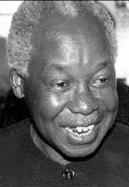
Julius Kambarage Nyerere 1922 to 1999 Roman Catholic Church Tanzania

Julius Kambarage Burito Nyerere was born in 1922 at Butiama village, Musoma, Tanzania. He was a Zanaki by tribe. His father was Chief Burito Nyerere and his mother was Mgaya Wanyang'ombe. His father died while Kambarage was still young. His mother who raised him died in 1997 at the ripe old age of almost 100. Kambarage, the name he was given at birth, means "the spirit which gives rain" in Zanaki because the day he was born a very heavy rain fell.

In 1934 he was admitted to Mwetenge Primary School in Musoma, Tanzania, a school that was about forty-two kilometers from his home. Nyerere was a brilliant and hard working student. He regularly scored the highest marks in the class and was the leading pupil in all examinations. He received the highest score in the country on the standard four examination. After that he undertook studies at Tabora Government School in 1937, graduating in 1942.

When he reached the age of twenty, he decided to join the Roman Catholic Church. For the occasion he was asked to take a baptismal name so he chose the name Julius. He was baptized on December 23, 1943 by Father Mathias Koenen.

After passing the examination at Tabora quite successfully, he was able to begin studies at Makerere University in 1945. At the university, Nyerere liked to talk about politics, especially the politics of liberation. He also preferred traditional African dances to western forms of dance. He disapproved of drinking alcohol. Some of his fellow students thought that Julius Nyerere might become a priest later on because of this.

After Makerere University Nyerere took a position as a teacher at Saint Mary's School, owned by the Roman Catholic Church in Tabora.

Nyerere received a scholarship to go to Edinburgh University in Scotland where he studied history, politics, and economics. In addition, in his spare time he studied Greek and Latin. In 1952, he was the first Tanzanian to be awarded a Masters degree. When he returned to Tanzania he was assigned to work at St. Francis School, Pugu.

Nyerere married Maria Gabriel Majige, a primary school teacher, on January 24, 1953. Father William Collins officiated at their wedding.

In 1954 he started to get involved in politics and joined the political party called Tanganyika African Association (TAA). On July 7, 1954 the name of the party was changed to Tanganyika African National Union (TANU). At this meeting Nyerere was elected the first president of TANU. The Roman Catholic leadership in charge of St. Francis School at Pugu where he was teaching asked him to choose between teaching at their school and his work in politics. Consequently he decided to resign his teaching position and pursue politics.

He traveled throughout the country campaigning for independence (Uhuru in Swahili), continuing on even in the face of numerous threats and obstacles from the colonial government. In 1958 he went in front of the United Nations Organization (UNO) to plea for the independence of Tanganyika which was then under the ordinance of the British Trusteeship Territory. On December 9, 1961, Tanzania received its independence and Nyerere became the first prime minister of Tanganyika. After a few months, he resigned from his position in order to strengthen the party and Rashid Mfaume Kawawa became prime minister. On December 9, 1962, Nyerere was elected the first president of the Republic of Tanganyika. When Tanganyika and Zanzibar united to form the United Republic of Tanzania on April 26, 1964, Nyerere became the first president of Tanzania.

He introduced the political ideology of socialism and self-reliance so "that people…could live together and develop in dignity and freedom, receiving the full benefits of their cooperative endeavors." (Man and Development, p. 37)

Even as a politician, Nyerere practiced his Christian faith openly in concrete ways. First, he was a very devoted member of the Roman Catholic Church. When at home he went to early Morning Prayer everyday from 6.00 to 7.00 a.m. at St. Joseph's congregation, Dar es Salaam. Also, instead of fancy titles, he preferred to be called Mwalimu which means "teacher" in Swahili. Secondly, for the sake of religious tolerance he helped to formulate the religious articles in the constitution of the government of Tanzania and endorsed them in the 1960s. These articles, which are still used at the present time, mainly focus on the right to freedom of religion. The article on freedom of religion was re-incorporated in 1984, 1992, 1995, and 1997. Thirdly, Nyerere made many efforts to cultivate mutual relationships with religious leaders.

Fourthly, whenever he was invited to participate in church functions, he challenged churches to strive to fulfill their calling. Nyerere was a committed and professing Christian and church member and, as a result, he felt it was his responsibility as a politician to challenge the church to remember her responsibility to society. In one of the speeches he gave at the Maryknoll Sister's Conference in New York on October 16, 1970 (quoted from Man and Development, p. 48), he emphasized the church's role in society in these words:

Poverty is not the real problem of the modern world. For we have the knowledge and resources which could enable us to overcome poverty. The real problem--the thing which causes misery, wars, and hatred among men--is the division of mankind into rich and poor. We can see this division at two levels. Within nation states there are a few individuals who have great wealth and whose wealth gives them great power, but the vast majority of the people suffer from varying degrees of poverty and deprivation. Even in a country like the United States of America, this division can be seen. In countries like India, Portugal, or Brazil, the contrast between the wealth of a few privileged individuals and the dire poverty of the masses is a crying scandal.
Again, speaking on the unfair distribution of the world's resources, Nyerere stated:
…There are few wealthy nations that dominate the whole world economically--and therefore politically--and a mass of smaller and poor nations whose destiny, it appears, is to be dominated. The significance about this division between the rich and the poor is not simply that one man has more food than he can eat, more clothes than he can wear and more houses than he can live in, while others are hungry, unclad, and homeless. The significant thing about the division between rich and poor nations is not simply that one has the resources to provide comfort for all its citizens, and the other cannot provide basic services. The reality and depth of the problem arises because the man who is rich has the power over the lives of those who are poor, and the rich nation has power over the nations which are not rich. So the rich get richer and more powerful, while the poor get relatively poorer and less able to control their own future.
What is the role of the church in such situations? Nyerere calls the church to recognize the need for a social revolution, and to play a leading role in it, "for it is the fact of history, that almost all successful social revolutions which have taken place in the world have been led by people who were themselves beneficiaries under the system they sought to replace" (Man and Development, p.98). He continues to say that,
(…) the church should join with these nations [Scandinavian countries and Canada] and if possible help to increase their number….Only by activities in these fields can the church justify its relevance in the modern world. For the purpose of the church is Man-- his human dignity and his right to develop himself in freedom. For all human institutions including the church, are established in order to serve man And it is the institution of the church, through its members which should be leading to attack on any organization, or any economic, social, or political structure which oppresses men, and which denies to them the right and power to live as the sons of a loving God.
Finally, Nyerere concludes his speech to the Maryknoll Sisters by quoting from the Encyclical letter of His Holiness Pope Paul VI on the development of people, "If someone who has riches of this earth sees his brother in need and closes his heart to him, how does the love of God abide in him?" The pope then quoted St. Ambrose, "You are not making a gift of possessions to the poor person, you are handing over to him what is his." Later Nyerere quotes the letter again, saying, "To wage war on misery and struggle against injustice is to promote, along with improved conditions, the human and spiritual progress of all men, and therefore the common good of humanity. Peace cannot be limited to a mere absence of war; it is the result of an ever-precarious balance of forces. No, peace is something that is built up day after day, in the pursuit of an order intended by God, which implies a more perfect form of justice among men." (Man and Development, pp. 98-99)

As president of Tanzania from 1961 to 1985--and even afterwards--Nyerere continued to challenge the church until his demise in 1999. He often had the opportunity of speaking to church leaders and the laity and told them that the church had to serve the whole person, mentally, spiritually, and physically. Furthermore, he said that church had to serve people beyond the church. For instance, schools, hospitals, and income generating projects would not only benefit churches and Christians but also non-believers. This was a means of witnessing the Word of God to unbelievers.

In 1989 and 1993, as chairman of the ruling party called Chama Cha Mapinduzi (CCM or "Revolutionary Party") Nyerere led two seminars--one in Dodoma and one in Zanzibar--on family planning and the development of Tanzania, that were attended by party leaders, government leaders, and religious leaders--both Christian and Muslim.

For the well-being of individuals and the nation in general, Nyerere was committed to peace initiatives in Tanzania especially in the area of religious tolerance. Thanks to his wisdom, Tanzania has lived in a state of religious tolerance since independence in 1961 because of the foundation Nyerere laid, especially between Christians and Muslims. President of the United Republic of Tanzania, His Excellency Jakaya Mrisho Kikwete, affirmed this in a speech he gave at Boston University (U.S.A.) on September 25, 2006 entitled "Managing Religious Diversity in a Democratic Environment: The Tanzania Experience" in which he said,
The political unity and religious tolerance that we pride ourselves in did not come by accident. It is a product of deliberate action and the vision of leaders of Tanzania from the founding president, the late Mwalimu Julius Nyerere, to the present. (…) Thanks to the remarkable foresight of our founding president Mwalimu Julius Kambarage Nyerere, specific actions were taken to engender tolerance in matters of faith and manage potential cracks to our country. These categories can be classified into four categories: equitable policies, institutional innovations, political messages, and legal constitutional provisions.

Nyerere realized very early on that equal access to education among Christians and Muslims would bring national unity and cohesion. Inversely, he recognized the potential dangers of religious discord resulting from imbalances in that area. Equal opportunities in matters of employment and participation in national affairs for Muslim and Christian Tanzanians were the direct result of equal education opportunities.

Soon after independence Nyerere initiated a legislation which was passed in 1962, compelling missionary schools to admit students of all denominations and faiths. In 1969 all non-state schools (the majority of which belonged to Christian missions) were taken over and made state schools. Seminaries were the only ones spared. (The Guardian, September 28, 2006).
In his Boston University address, Kikwete expressed a very positive view of all that Nyerere had done to achieve equity in the educational sector for the sake of religious tolerance, saying, "Drastic as they may seem, these steps went a long way toward promoting and projecting the larger cause of national unity and social harmony which has become the hallmark of Tanzania today."

Finally, Nyerere was well versed in his knowledge of the Bible and a good witness to his faith. He emphasized that the African socialism practiced in Tanzania necessarily included religion. A communistic and purely secular system would be against the interests of the country and would not work.

Nyerere resigned from the office of the presidency in 1985. Due to his reputation as a leader, the international community appointed him peacemaker for the Burundi conflicts. Later he was appointed mediator for the political problems in the Democratic Republic of Congo. He was also chairman of the South-South Commission. In his reconciliation efforts, Nyerere noted that the major causes of civil conflicts were poverty, greed for power, and tribalism.

Using his international influence, Nyerere launched a campaign for the cancellation of debts owed by poor countries. The campaign, which was continued by many other organizations worldwide, persuaded some rich countries to cancel the debts of developing countries.

Shortly before his demise, Nyerere predicted his death and promised to pray for the people of Tanzania, saying, "Najua sitapona toka ugonjwa huu. Nasikitika kuwaacha Watanzania wangu. Najua watalia sana. Lakini mimi nitawaombea mbele ya Mungu." ("I know that I shall not recover from this sickness. I am unhappy to leave my Tanzanians. I know that they will mourn very much. But I shall pray for them before God.") Indeed it was a very sad day for President Benjamin Mkapa, the cabinet, all of Tanzania, and friends of Tanzania worldwide, when Julius Kambarage Nyerere, "the father of the nation" died on October 14, 1999 at 10.30 a.m. at St. Thomas' hospital in London, United Kingdom.

His body was flown to Dar-es-Salaam, Tanzania on October 18, 1999 then taken to the national stadium in order to give the people an opportunity to bid him farewell. International representatives and presidents from many African nations, the United States, and Canada came to give their condolences to the nation of Tanzania for the death of Mwalimu Nyerere. Afterwards, his body was flown from Dar-es-Salaam to Butiama, his birth place, Musoma district, Tanzania on October 21, 1999 in the afternoon. On October 22 the people from Butiama village, Mara region, and the neighboring regions paid their respects to Mwalimu Nyerere. He was buried on October 23, 1999 in God's graveyard, belonging to Nyerere's family in Butiama village.

Nyerere was a great politician and African thinker as well as a philosopher. He left behind a widow, Maria J. Nyerere, and seven children. Their names are Rosemary, Anna, Madaraka, Makongoro, Andrew, John, and Majige.

Nyerere wrote many books and some of his speeches were compiled into books. Some of his works are After the Arusha Declaration (1967), Azimio la Arusha (The Arusha Declaration) [1976], Crusade for liberation (1978), Education for Self-Reliance (1967), Freedom and Development (1960), Man and Development (1974), Ujamaa--Essays on Socialism (1968 and 1971), Uongozi wetu na hatima ya Tanzania (Our leadership and the destiny of Tanzania) [1993]. Some of his books are used as university text books in Tanzania and beyond and some have been translated from Swahili into English, French, Portuguese, and Arabic. Nyerere also translated some books of the Bible into Zanaki. In 1996 he wrote poetry and spiritual songs inspired by the Gospels of Matthew, Mark, Luke, John, and the Acts of the Apostles.

In 2005 the Catholic Diocese of Musoma opened a cause for Nyerere's beatification. Tanzanian Catholics eagerly await the Vatican's final decision on the canonization of Mwalimu Julius Kambarage Nyerere, a devout Roman Catholic and first president of the United Republic of Tanzania.

Nyerere was a great historical figure not only in Tanzania but also in the rest of Africa and the world, having committed his life to attaining independence for his country--and supporting the efforts of other surrounding countries--to establishing peace and stability, and to developing economic and educational opportunities in Tanzania while preserving human rights and dignity. His Christian life as a political leader was exemplary. May God bless all the things he achieved for the well-being of mankind. [1]
Angolwisye Isakwisa Malambugi

Biography : Julius Kambarage Nyerere

Nyerere


One of Africa’s most respected figures, Julius Nyerere (1922 — 1999) was a politician of principle and intelligence. Known as Mwalimu or teacher he had a vision of education that was rich with possibility
Julius Kambarage Nyerere was born on April 13, 1922 in Butiama, on the eastern shore of lake Victoria in north west Tanganyika. His father was the chief of the small Zanaki tribe. He was 12 before he started school (he had to walk 26 miles to Musoma to do so). Later, he transferred for his secondary education to the Tabora Government Secondary School. His intelligence was quickly recognized by the Roman Catholic fathers who taught him. He went on, with their help, to train as a teacher at Makerere University in Kampala (Uganda). On gaining his Certificate, he taught for three years and then went on a government scholarship to study history and political economy for his Master of Arts at the University of Edinburgh (he was the first Tanzanian to study at a British university and only the second to gain a university degree outside Africa. In Edinburgh, partly through his encounter with Fabian thinking, Nyerere began to develop his particular vision of connecting socialism with African communal living.

On his return to Tanganyika, Nyerere was forced by the colonial authorities to make a choice between his political activities and his teaching. He was reported as saying that he was a schoolmaster by choice and a politician by accident. Working to bring a number of different nationalist factions into one grouping he achieved this in 1954 with the formation of TANU (the Tanganyika African National Union). He became President of the Union (a post he held until 1977), entered the Legislative Council in 1958 and became chief minister in 1960. A year later Tanganyika was granted internal self-government and Nyerere became premier. Full independence came in December 1961 and he was elected President in 1962.

Nyerere’s integrity, ability as a political orator and organizer, and readiness to work with different groupings was a significant factor in independence being achieved without bloodshed. In this he was helped by the co-operative attitude of the last British governor — Sir Richard Turnbull. In 1964, following a coup in Zanzibar (and an attempted coup in Tanganyika itself) Nyerere negotiated with the new leaders in Zanzibar and agreed to absorb them into the union government. The result was the creation of the Republic of Tanzania.

Ujamma, socialism and self reliance

As President, Nyerere had to steer a difficult course. By the late 1960s Tanzania was one of the world’s poorest countries. Like many others it was suffering from a severe foreign debt burden, a decrease in foreign aid, and a fall in the price of commodities. His solution, the collectivization of agriculture, villigization (see Ujamma below) and large-scale nationalization was a unique blend of socialism and communal life. The vision was set out in the Arusha Declaration of 1967 (reprinted in Nyerere 1968):

"The objective of socialism in the United Republic of Tanzania is to build a society in which all members have equal rights and equal opportunities; in which all can live in peace with their neighbours without suffering or imposing injustice, being exploited, or exploiting; and in which all have a gradually increasing basic level of material welfare before any individual lives in luxury." (Nyerere 1968: 340)

The focus, given the nature of Tanzanian society, was on rural development. People were encouraged (sometimes forced) to live and work on a co-operative basis in organized villages or ujamaa (meaning ‘familyhood’ in Kishwahili). The idea was to extend traditional values and responsibilities around kinship to Tanzania as a whole.

Within the Declaration there was a commitment to raising basic living standards (and an opposition to conspicuous consumption and large private wealth). The socialism he believed in was ‘people-centred’. Humanness in its fullest sense rather than wealth creation must come first. Societies become better places through the development of people rather than the gearing up of production. This was a matter that Nyerere took to be important both in political and private terms. Unlike many other politicians, he did not amass a large fortune through exploiting his position.

The policy met with significant political resistance (especially when people were forced into rural communes) and little economic success. Nearly 10 million peasants were moved and many were effectively forced to give up their land. The idea of collective farming was less than attractive to many peasants. A large number found themselves worse off. Productivity went down. However, the focus on human development and self-reliance did bring some success in other areas notably in health, education and in political identity.

Liberation struggles

A committed pan-Africanist, Nyerere provided a home for a number of African liberation movements including the African National Congress (ANC) and the Pan African Congress (PAC) of South Africa, Frelimo when seeking to overthrow Portuguese rule in Mozambique, Zanla (and Robert Mugabe) in their struggle to unseat the white regime in Southern Rhodesia (now Zimbabwe). He also opposed the brutal regime of Idi Amin in Uganda. Following a border invasion by Amin in 1978, a 20,000-strong Tanzanian army along with rebel groups, invaded Uganda. It took the capital, Kampala, in 1979, restoring Uganda’s first President, Milton Obote, to power.

The battle against Amin was expensive and placed a strain on government finances. There was considerable criticism within Tanzania that he had both overlooked domestic issues and had not paid proper attention to internal human rights abuses. Tanzania was a one party state — and while there was a strong democratic element in organization and a concern for consensus, this did not stop Nyerere using the Preventive Detention Act to imprison opponents. In part this may have been justified by the need to contain divisiveness, but there does appear to have been a disjuncture between his commitment to human rights on the world stage, and his actions at home.

Retirement

In 1985 Nyerere gave up the Presidency but remained as chair of the Party - Chama Cha Mapinduzi (CCM). He gradually withdrew from active politics, retiring to his farm in Butiama. In 1990 he relinquished his chairmanship of CCM but remained active on the world stage as Chair of the Intergovernmental South Centre. One of his last high profile actions was as the chief mediator in the Burundi conflict (in 1996). He died in a London hospital of leukaemia on October 14, 1999.

Julius Nyerere president of Tanzania

Julius Nyerere, in full Julius Kambarage Nyerere, also called Mwalimu (Swahili: “Teacher”) (born March 1922, Butiama, Tanganyika—died October 14, 1999, London, England), first prime minister of independent Tanganyika (1961), who became the first president of the new state of Tanzania (1964). Nyerere was also the major force behind the Organization of African Unity (OAU; now the African Union).
Nyerere was a son of the chief of the small Zanaki ethnic group. He was educated at Tabora Secondary School and Makerere College in Kampala, Uganda. A convert to Roman Catholicism, he taught in several Roman Catholic schools before going to Edinburgh University. He was the first Tanganyikan to study at a British university. He graduated with an M.A. in history and economics in 1952 and returned to Tanganyika to teach.
By the time Nyerere entered politics, the old League of Nations mandate that Britain had exercised in Tanganyika had been converted into a United Nations trusteeship, with independence the ultimate goal. Seeking to hasten the process of emancipation, Nyerere joined the Tanganyika African Association, quickly becoming its president in 1953. In 1954 he converted the organization into the politically oriented Tanganyika African National Union (TANU). Under Nyerere’s leadership the organization espoused peaceful change, social equality, and racial harmony and rejected tribalism and all forms of racial and ethnic discrimination.
In 1955 and 1956 he journeyed to the United Nations in New York City as a petitioner to the Trusteeship Council and the Fourth Committee on trusts and non-self-governing territories. After a debate that ended in his being granted a hearing, he asked for a target date for the independence of Tanganyika. The British administration rejected the demand, but a dialogue was begun that established Nyerere as the preeminent nationalist spokesman for his country.

The British administration nominated him a member of the Tanganyikan Legislative Council, but he resigned in 1957 in protest against the slowness of progress toward independence. In elections held in 1958–59, Nyerere and TANU won a large number of seats on the Legislative Council. In a subsequent election in August 1960, his organization managed to win 70 of 71 seats in Tanganyika’s new Legislative Assembly

Progress toward independence owed much to the understanding and mutual trust that developed during the course of negotiations between Nyerere and the British governor, Sir Richard Turnbull. Tanganyika finally gained responsible self-government in September 1960, and Nyerere became chief minister at this time. Tanganyika became independent on December 9, 1961, with Nyerere as its first prime minister. The next month, however, he resigned from this position to devote his time to writing and synthesizing his views of government and of African unity. One of Nyerere’s more important works was a paper called “Ujamaa—The Basis for African Socialism,” which later served as the philosophical basis for the Arusha Declaration (1967). When Tanganyika became a republic in 1962, he was elected president, and in 1964 he became president of the United Republic of Tanzania (Tanganyika and Zanzibar).
Nyerere was reelected president of Tanzania in 1965 and was returned to serve three more successive five-year terms before he resigned as president in 1985 and handed over his office to his successor, Ali Hassan Mwinyi. From independence on Nyerere also headed Tanzania’s only political party, Chama Cha Mapinduzi (CCM).

As outlined in his political program, the Arusha Declaration, Nyerere was committed to the creation of an egalitarian socialist society based on cooperative agriculture in Tanzania. He collectivized village farmlands, carried out mass literacy campaigns, and instituted free and universal education. He also emphasized Tanzania’s need to become economically self-sufficient rather than remain dependent on foreign aid and foreign investment. Nyerere termed his socialist experimentation ujamaa (Swahili: “familyhood”), a name that emphasized the blend of economic cooperation, racial and tribal harmony, and moralistic self-sacrifice that he sought to achieve. Tanzania became a one-party state, though certain democratic opportunities were permitted within that framework.


As a major force behind the modern Pan-African movement and one of the founders in 1963 of the OAU, Nyerere was a key figure in African events in the 1970s. He was a strong advocate of economic and political measures in dealing with the apartheid policies of South Africa. Nyerere was chairman of a group of five frontline African presidents who advocated the overthrow of white supremacy in Rhodesia (now Zimbabwe), South Africa, and South West Africa/Namibia (now Namibia).
Nyerere’s concerns on the domestic front were dominated by economic hardships and by difficulties between Nyerere and Idi Amin of Uganda. In 1972 Nyerere denounced Amin when the latter announced the expulsion of all Asians from Uganda. When Ugandan troops occupied a small border area of Tanzania in 1978, Nyerere pledged to bring about the downfall of Amin, and in 1979 the Tanzanian army invaded Uganda in support of a local movement to overthrow him. Nyerere’s intervention helped to unseat Amin and brought about the return to power in Uganda of Milton Obote in 1980.

Though enthusiastically adopted by his countrymen and steadfastly supported by sympathetic western European nations, Nyerere’s socialist policies failed to spur economic development in Tanzania. At the time of his resignation in 1985, Tanzania was still one of the world’s poorest countries, with a per capita income of about U.S. $250. 

Agriculture remained at the subsistence level, and the country’s industrial and transportation infrastructures were chronically underdeveloped. One-third of the national budget was supplied by foreign aid. Tanzania had one of the highest literacy rates in Africa, however, and the society was both politically stable and notably free of economic inequalities. Nyerere himself remained committed to socialist policies throughout his political career.
Nyerere continued as chairman of the CCM until 1990. Thereafter he assumed the role of elder statesman and was regularly called upon to act as arbiter in international crises such as those in Rwanda and Burundi.
Soft-spoken, unpretentious, small of stature, and quick to laugh, Julius Nyerere was widely credited with impressive oratorical skills and unusual powers of political perception. His thoughts, essays, and speeches are collected in his books, Uhuru na Umoja (1967; Freedom and Unity), Uhuru na Ujamaa (1968; Freedom and Socialism), and Uhuru na Maendeleo (1973; Freedom and Development). He also translated two plays by William Shakespeare, The Merchant of Venice and Julius Caesar, into Swahili.